Ever With One Eye Cast Towards Heaven
Or: The Old Man and the Sea of stars

All systems seek ground. In every serious attempt at formalizing the behavior of nature, made by every species, on every planet, this principle is foundational. Electrons settle in free orbitals close to the atomic nucleus, water runs downhill, planets, thrown stones, and photons alike all follow the contours of space. As a reed bends in a stream, so too do the patterns of energy that compose what we call reality follow this principle of ‘flowing’ and in so doing preserve and sustain themselves. On Earth, humans call it the Principle of Least Action, and formalize it as so:
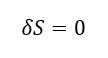
Similar, equally pithy expressions arise in other species’ physics, and the more advanced a civilization the more prominent it is in their theories and collective understanding of existence. Some go so far as to declare it a ‘Theory of Everything’ and attempt to derive all the patterns of nature using it along with careful observation, to varying degrees of success.
Philiopa Caireen Astrid Adama was monitoring the satellite feed at the Bezel-5 station, 16 degrees South of Belichore’s magnetic north when the system automatically flagged a new planet for review. The planet itself wasn’t new, appearing to have formed some 17 galactic years ago (several billions of Belichore years), but it was new to the Galactic Commonwealth and that’s what counted. Planets were a dime a dozen, but the AI had decided this one was worth a look, based off multi-spectral data, gravimetric analysis, and EM background.
“Yeah, we got a hot one: 26k years from the origin, 117° lateral, 27° above galactic plane. Looks wet and lively.”
His report went out to all staff in the facility, kicking off a flurry of activity and comms chatter as everyone turned their attention to the new discovery.
“Definitely inhabited—looks like it’s been in its star’s sweet spot for most of its life.”
“Those luminous spots could be cities: running stat comp now.”
“Think it’s a global civ?”
“Maybe. Look at the distribution though. If that’s one civ, they have massive inequality issues. They’re probably cloaca-deep in a carbon pulse.”
“I’ll start atmospheric analysis.”
A larger observation post hosting multiple groups tracking dozens or hundreds of satellite array feeds would have separate comms channels, but Adama’s operation was small—intimate, even—comprised of himself, two of his brothers, an aunt, her father, and a few contract workers. They couldn’t compete with big corporate firms in terms of volume, but the few discoveries they made each year were enough to sustain them all financially. Adama’s instincts, honed over centuries in the profession of planetary detection and analysis, told him this body would be one such find.
At a higher level of abstraction, a second precept emerges: the maximum power principle. Roughly speaking (and generalizing for variations across cultures and scientific formulations) it states that those systems (patterns) that maximize their intake of energy and transform it most efficiently succeed, leaving those that do not to fail and be forgotten by history. On some visceral level, all living things know this, and so live out their lives at the absolute extremes, constantly testing their limits, always pushing for more while flirting with destruction.
To have absolute power would make one a god, yet such control is beyond even the combined efforts of the Galactic Commonwealth. The power to destroy utterly on a planetary scale is within their grasp: a handful of meteors equipped with warp drives is sufficient to render entire worlds into plasma and exotic matter. Yet even if the minds behind the hands and claws and tentacles holding the levers of power suddenly committed to destroying the galaxy, it would take them billions of years to do so: there are, quite simply, too damn many planets to swat one by one. What’s more, destruction is always easier than creation, and the fabrication of even a single artificial planet remains utterly beyond the capabilities of even the most advanced species. Power inviolate is nothing but a fantasy.
Knowing this, most civilized cultures settle for the pursuit of knowledge: while lacking the visceral appeal of creation and destruction, prediction is the next best thing. If you cannot control the future, at least you know what’s coming and plan accordingly, and the Galactic Commonwealth self-organized around this very notion. Individual species still have local economies powered by fiat currencies, but on the grandest scale, information is what makes the GC tick: Who’s building what? Who’s behind that coup? When will that star go supernova? How’s the local economy in this or that system? Who’s running out of cobalt? Which planets host civilizations? Which civilizations might develop warp?
“Oh, it’s a bloody mess down there,” Renifrose Palstrup moaned, running two of his pincers through the rough black bristles on either side of his four green eyes, “they’re in an arms race with themselves—have been for as far back as we can sample the frequencies they use.”
Adama kept his cool, despite the youth’s entirely justifiable concern. This wasn’t his first brinking planet, and it probably wouldn’t be the last.
“I know it’s difficult to bear witness to, but it’s part of the natural cycle,” he explained, gently patting Palstrup on his carapace with his dominant claw, “most intelligent extra’s find themselves caught in multipolar traps before they can unify and stabilize their environs, and their internecine violence ruins them in the early stages. ”
“But they can’t join the GC! Fortunately, their physics is childishly primitive so there’s no chance they’ll figure out warp on their own, but could you imagine how dangerous they’d be if we—”
“That’s why our work is so important,” Adama cut him off, straightening his antennae with one of his smaller hindclaws, “with the reports we provide, the GC can decide when and how to gift warp to promising species, and whether the dangerous ones are close enough to figuring it out on their own that they need swatting.”
“So it’s just a bust for us, then?” The young Belichorian moaned, “our first independent extra’ civ in how many years, and we just have to watch them destroy themselves?”
“Perhaps, perhaps not,” Adama mused, scuttling across the chamber to the massive central monitor where data on the small blue planet was still pouring in. “I’ve requested we be given exclusive rights to this find: once I get the report to Oculus Prima and they ship it off to the Deciders of the GC, it will only be a few days before we know what their plans are for this little planet. They might surprise you.”
Life is a pattern of energy, like a whirlpool in a stream or the vibrations of air that underlie the notes of a song. It exists at extremely high levels of abstraction, but that does not alter its nature, nor does it free it from the principles of behavior that govern the rest of reality:
Seek ground, maximize power, sustain oneself.
Civilizations follow these commandments as they rise and fall, often becoming victims of their own success: incomplete knowledge—especially of the consequences of one’s actions—leads to ruin as surely as failure to recognize when to act. All-too-often, complex life becomes lost in the web of abstractions it creates to make sense of itself and its environment, wasting precious energy in the pursuit of mere tokens that represent power and stability, rather than the genuine articles.
Every pattern, however, is nested in a larger one. The universe is infinite in every direction, including inwards and outwards: an unbounded fractal spiral that continues far below the scale of protons and exceeds even the grandeur of networks of galactic superclusters. When a species organizes into a planet-spanning social structure, it rarely does so outside the context of an even greater, pan-species super-culture, and the tide of one species’ fortunes never rises or falls without someone taking notice and asking themselves “how does this benefit me?”
Palstrup resigned his post a few years after long-term monitoring of the planet its inhabitants called “Earth” began at Bezel-5 station. Adama was disappointed to lose such a promising lad, but quickly filled the empty position with someone he hoped would prove more emotionally resilient. Even so, he took measures to shield them from the goriest details of the drama playing out on that pale blue dot. Adama was old and perhaps a bit jaded, but even he recoiled at the rapidity of the winnowing these apes experienced. Billions within a few of their extremely short generations…
Still, he took comfort in his own knowledge that there was nothing to be done but watch and wait. History was littered with well-intentioned interventions into similar situations, and the result was always merely to intensify the carnage. Eventually, the GC’s Deciders realized it was better to let nature run its course and then salvage what they could from the self-primitivized—or sterilized—world, even if it was just raw materials, data, and historical artifacts.
Adama sat his post throughout all of it. Thousands of Earth years elapsed and yet he maintained his vigil, helping to welcome dozens of worlds into the GC and watching hundreds more flare out and die in the depths of space during that long watch. He had been old for a Belichorian when he’d first made the discovery, but now he was truly ancient: his once-ochre carapace was faded nearly white and his bristles had long-since greyed and fallen out. He had no wish to retire: his profession was his passion. He carried out his duty because it sustained his family in the Belichore Provincialist’s own economic hierarchy, and because he felt deeply within his ostia that it was the right thing to do. He brought enlightenment to those that could be enlightened, and bore witness to the dramatic finales of those that could not.
All along he suspected, however, that those clever apes would persevere, and persevere they did. They ruined eighty percent of their land area, wasted ninety-nine percent of their non-renewable resources, and nearly baked themselves to extinction through unintentional runaway atmospheric terraforming, but they didn’t extinct themselves. Instead, they relocated their cities to the now-temperate poles and promptly reinvented their old East-West conflicts along a new North-South axis. They had apparently learned little from their mistakes, but were suitably humbled, Adama determined, for the GC to finally consider sending them an invitation to the proverbial party.
He tried to exercise the same clinical dispassion he always did when composing a report for the Deciders, knowing what little influence he had in their deliberations was limited to respect for his seniority and impartiality. Yet, he had formed an emotional attachment to these distant critters and their beleaguered biosphere. He’d been with them through thick and thin, watching, waiting for the moment when he could actually offer them material aid. When, ever so indirectly, he would finally have the opportunity to grab them by their collective shoulders, give them a good shake and say “Look up you fools! You’re missing the point of all of this!”
Two Belichore days later, Adama received word that the Deciders would send a welcome package to Earth: two warp-capable ships (one for each ape faction) and an orbital launch platform for them to share. Bezel-5 station and its operators were hereby relieved of their duty to monitor Earth#153.57.093.42 moving forward, a responsibility that would now fall on the shoulders of the GC’s threat detection and management force, but the Deciders had high hopes these ‘humans’ would make excellent trading partners for at least a galactic minute. It was likely that, in time, they would grow bellicose and expansionist once more, having never fully renounced their strange, singular, materialist views of totality, but the Deciders were confident that they could be contained through careful diplomacy.
All of this was relayed to Adama by his great granddaughter, as he had finally taken ill and left his post in Bezel-5. He knew he was dying; he could feel fluids in between the hard and soft layers of his mantle and knew what they portended. He was in great pain, and had been for at least a decade, but had long-since trained his mind to experience pain merely as a signal, like sound or electromagnetic flux, and so did not dwell on it any more than he wished. Only his body suffered; his mind was free, and in it he imagined the humans waking up to find out they were part of something so much grander than they had realized.
“It’s funny,” he mused, “there’s really nothing special about Earth. It’s very much like the majority of inhabited planets we’ve found, and its people display just the bare minimum of intelligence required to get themselves into serious trouble, as is the case ninety-nine times out of one hundred. I do believe they somehow came to represent, in my own mind, the unknown multitude of similar worlds and species that spring forth in the depths of space, extinguishing themselves before we can find them, and before they ever learn the truth…” he trailed off, staring into his great granddaughter’s concerned blue eyes, suddenly unsure whether he’d been speaking aloud or just in his head. Ah, well, he thought. Just the ramblings of an old man. It feels like it might be time, anyhow.
One by one, his senses slipped away from him as the matter that composed his body relaxed into a more stable state. The pain persisted longest, but felt more distant than ever, like a whisper across a long room barely registered by the listener. Patterns within patterns within patterns…he thought, mind suddenly more lucid than it had been in years. And then, with perfect clarity, he felt his mandibles slide across each other, producing the words “I wonder what’s next?”